Why Simple Systems Outlast Complex Ones
A system is only useful if I can keep using it after the excitement of designing the system disappears.
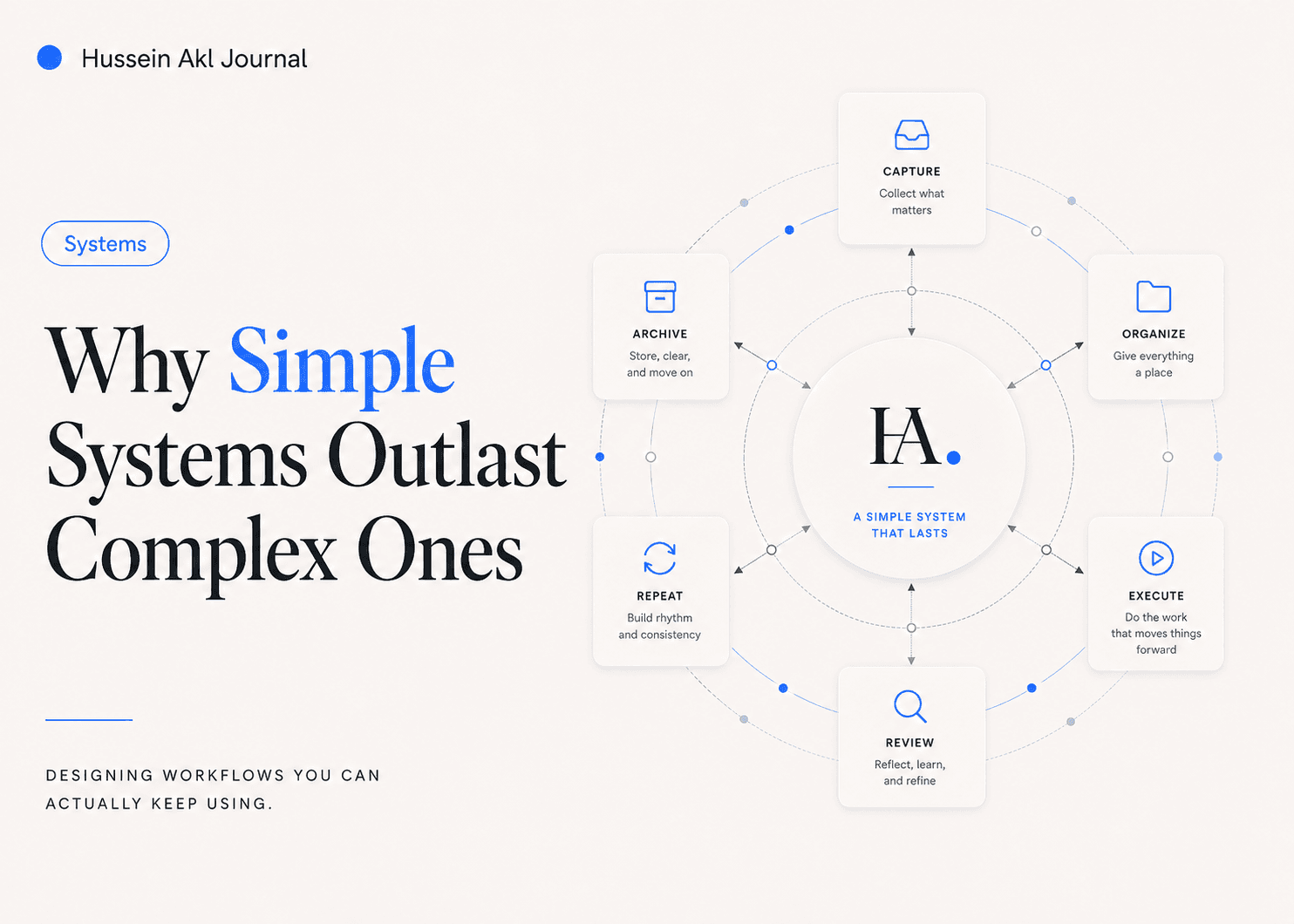
I enjoy designing systems, which means I have to be suspicious of systems that are enjoyable to design but annoying to use. Complexity can feel intelligent while quietly making the workflow fragile.
The real test is repetition
A system is not proven when it looks good on setup day.
It is proven after weeks of ordinary use.
Can I capture something quickly? Can I find it again? Can I understand what needs attention? Can I recover after missing a few days?
If the answer depends on perfect discipline, the system is probably too fragile.
Complexity creates maintenance
Every extra property, status, view and automation creates another thing that can break or become outdated.
Complexity can be justified when it removes more work than it creates.
But many systems become complicated because the designer is trying to model every possible situation in advance.
I prefer to let complexity earn its place.
Capture should be easy
The first job of many personal systems is to capture information before it disappears.
If capture requires too many decisions, I avoid it.
That is why I like simple inbox states.
I can save the thing now and organize it later, once I know whether it deserves more attention.
Organization should reflect real questions
A useful system should make recurring questions easier to answer.
What am I working on? What is blocked? What is next? What is waiting? What needs review? What can be archived?
If a database contains many fields but does not answer those questions quickly, the structure is decorative.
Fewer states create clearer movement
I prefer a small number of meaningful states.
For example:
- Inbox
- Active
- Waiting
- Done
- Archived
The exact labels can change, but each state should represent a real difference in behavior.
Too many statuses create ambiguity.
If I cannot explain what changes when an item moves from one status to another, I probably do not need both.
Reviews matter more than automation
Automation is attractive because it feels like the system is working for me.
But the most valuable part is often the review.
A weekly review forces judgment.
What still matters? What changed? What should be stopped? What deserves promotion from idea to project?
No automation can fully replace that decision-making.
Simple systems recover better
A good system should survive interruption.
Travel, deadlines, illness, launches and busy periods will break routines.
If recovery requires cleaning a week of overdue automations and rescheduling dozens of tasks, the system punishes absence.
I want a system where I can return, review what matters and continue.
The rule I use
I keep asking:
What is the smallest structure that still gives me clarity?
If a field is rarely used, remove it. If two views answer the same question, combine them. If a status does not change behavior, delete it. If an automation creates more exceptions than value, simplify it.
The objective is not minimalism for aesthetic reasons.
It is durability.
A simple system that survives five years is more useful than a brilliant system I abandon after five weeks.