What Makes a Brand System Actually Useful?
A brand system earns its value when people can use it consistently without needing the designer in the room.
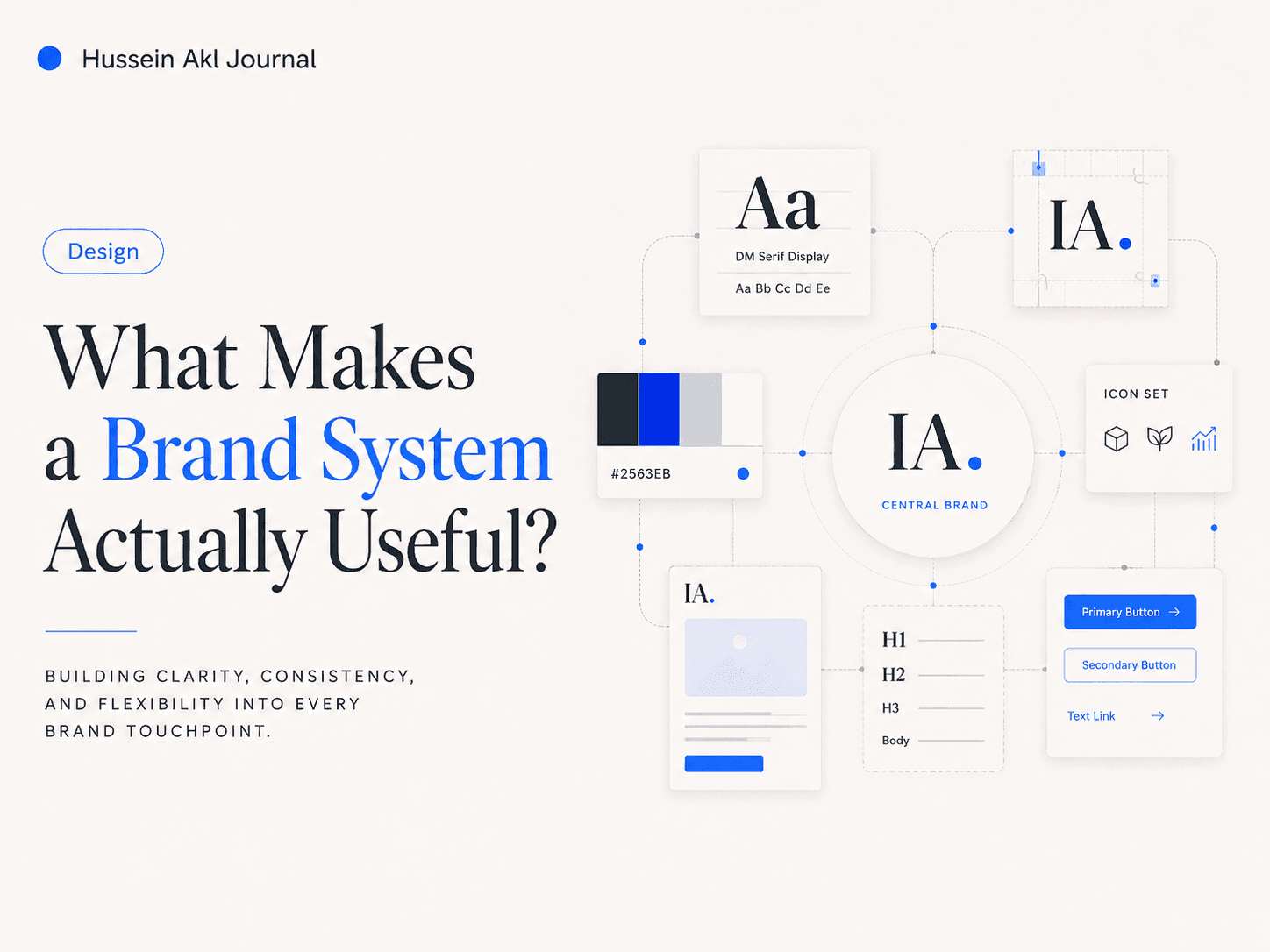
Some identity projects look impressive in a presentation and become difficult the moment real people start using them. I judge a brand system by what happens after the presentation is closed.
A brand system is an operating tool
A logo can be delivered as a file. A brand system has to survive decisions.
It needs to help someone answer practical questions: Which typeface should I use here? How should this campaign feel? Can I introduce a new color? What happens when the layout is narrow? What belongs on a social post versus a proposal?
If every decision requires the original designer, the system is incomplete.
Start with recognizable constants
The system needs a small number of things that remain stable enough to create recognition.
Those constants might include:
- A clear logo hierarchy
- A defined typographic structure
- A disciplined color system
- Consistent spacing and composition principles
- A recognizable photographic or illustration direction
- A defined tone of voice
The goal is not to freeze the brand. It is to establish a recognizable center.
Define ranges, not just rules
Rigid rules often fail because the real world introduces situations the guidelines never anticipated.
I prefer to define ranges.
Instead of saying every layout must look one way, define what makes the layout feel like the brand. Instead of banning every color outside a tiny palette, define primary, supporting and exceptional use. Instead of prescribing one image treatment, describe the qualities images should share.
Ranges create flexibility without removing judgment.
Build for the people who will use it
A brand system should reflect its users.
A small founder-led business needs different documentation from a multinational organization. A social team publishing every day needs different tools from a company producing a few high-value touchpoints each year.
The more frequently a decision repeats, the more useful it is to systemize it.
That might mean templates, component libraries, layout examples, writing prompts or approval rules.
Show bad combinations too
Guidelines often show only beautiful examples.
That creates a hidden problem: users understand what good looks like but not what makes something wrong.
A useful system also explains boundaries. It can show why certain logo placements fail, why a type pairing creates the wrong tone, or why a color ratio damages legibility.
The purpose is not to police taste. It is to transfer reasoning.
Connect strategy to execution
The strongest systems make the visual choices feel inevitable because they connect back to the brand strategy.
If the brand promises precision, the layout system should support precision. If the brand needs warmth, the language and photography should create warmth. If the audience values expertise, the identity should make complex information easier to trust.
Without that connection, guidelines become decoration management.
Make maintenance part of the system
Brands change because businesses change.
New products appear. Teams grow. Channels emerge. Old rules stop fitting.
A useful identity should have a process for evolution. Someone should know what can change locally, what requires review and what is fundamental to the brand.
A living system is more valuable than a perfect PDF that becomes outdated.
The test I use
I think a brand system is doing its job when three things are true:
- Different people can create new work without making the brand unrecognizable.
- The brand can adapt to new situations without inventing itself again.
- The system reduces decision fatigue instead of adding bureaucracy.
That is the standard I care about.
A useful brand system does not make every output identical. It makes every output feel intentional.