The Difference Between Activity and Real Progress
A full day can produce almost no movement if the work does not change the state of the project.
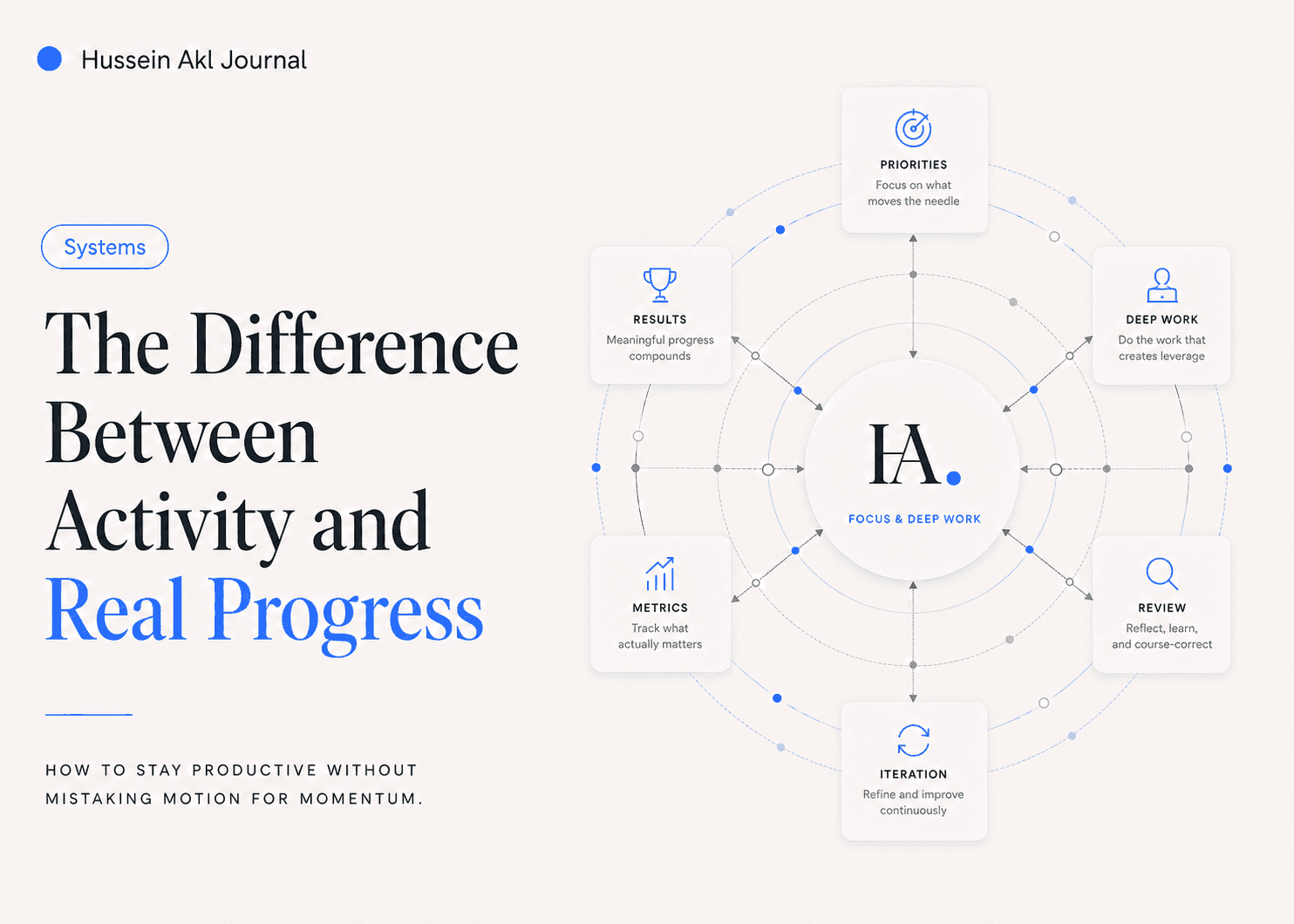
I can finish a day tired, answer dozens of messages, reorganize files, tweak designs and still leave the most important project almost exactly where it started. Activity is visible. Progress changes something.
Activity feels productive
Activity creates immediate feedback.
Emails disappear. Tasks get checked. Files get organized. Small visual problems get fixed. Messages receive replies.
Those things may be necessary.
The problem is that they can consume the entire day because each one provides a small sense of completion.
Meanwhile, the difficult work remains open.
Progress changes project state
I think of progress as a change in state.
A draft becomes approved. A product becomes testable. A build becomes deployable. A proposal becomes sent. A batch becomes published. A decision becomes final.
That definition helps me separate maintenance from movement.
I choose outcomes before tasks
A long task list can hide weak priorities.
So I try to define the outcome first.
What would make this project meaningfully different by the end of today?
Then I identify the work required to create that change.
The task list becomes a tool for the outcome instead of the main measure of productivity.
Deep work usually creates the movement
The work that changes project state is often the work that is easiest to postpone.
Writing the difficult section. Solving the architecture problem. Making the final design decision. Testing the real workflow. Finishing the import. Publishing the release.
These tasks require sustained attention because they contain uncertainty.
That is exactly why they matter.
Metrics can lie if the wrong thing is measured
It is easy to measure activity.
Hours worked. Tasks completed. Messages sent. Posts published. Features added.
Those numbers can be useful, but they do not automatically represent value.
I prefer to ask whether the metric is connected to the outcome.
More features are not progress if the product becomes less clear. More posts are not progress if the audience remains confused. More hours are not progress if the important decision is still avoided.
Maintenance still matters
Not every valuable task creates dramatic movement.
Systems need maintenance. Clients need communication. Files need organization. Products need support.
The point is not to eliminate operational work.
The point is to know which category of work I am doing.
Maintenance protects the current system. Progress moves the system forward.
Both are necessary, but they should not be confused.
I review by completed outcomes
At the end of a week, I get a clearer picture by asking what changed than by counting what I did.
What shipped? What became usable? What decision was made? What bottleneck disappeared? What became easier next week?
Those questions expose weeks that felt busy but produced little movement.
The practical rule
When I feel overwhelmed by many tasks, I ask:
What one completed outcome would make the rest of this work easier?
That question usually points toward the real project.
Activity fills time.
Progress changes the conditions of the next day.