The Difference Between a Logo and an Identity System
A logo identifies. An identity system creates the conditions for recognition across everything else.
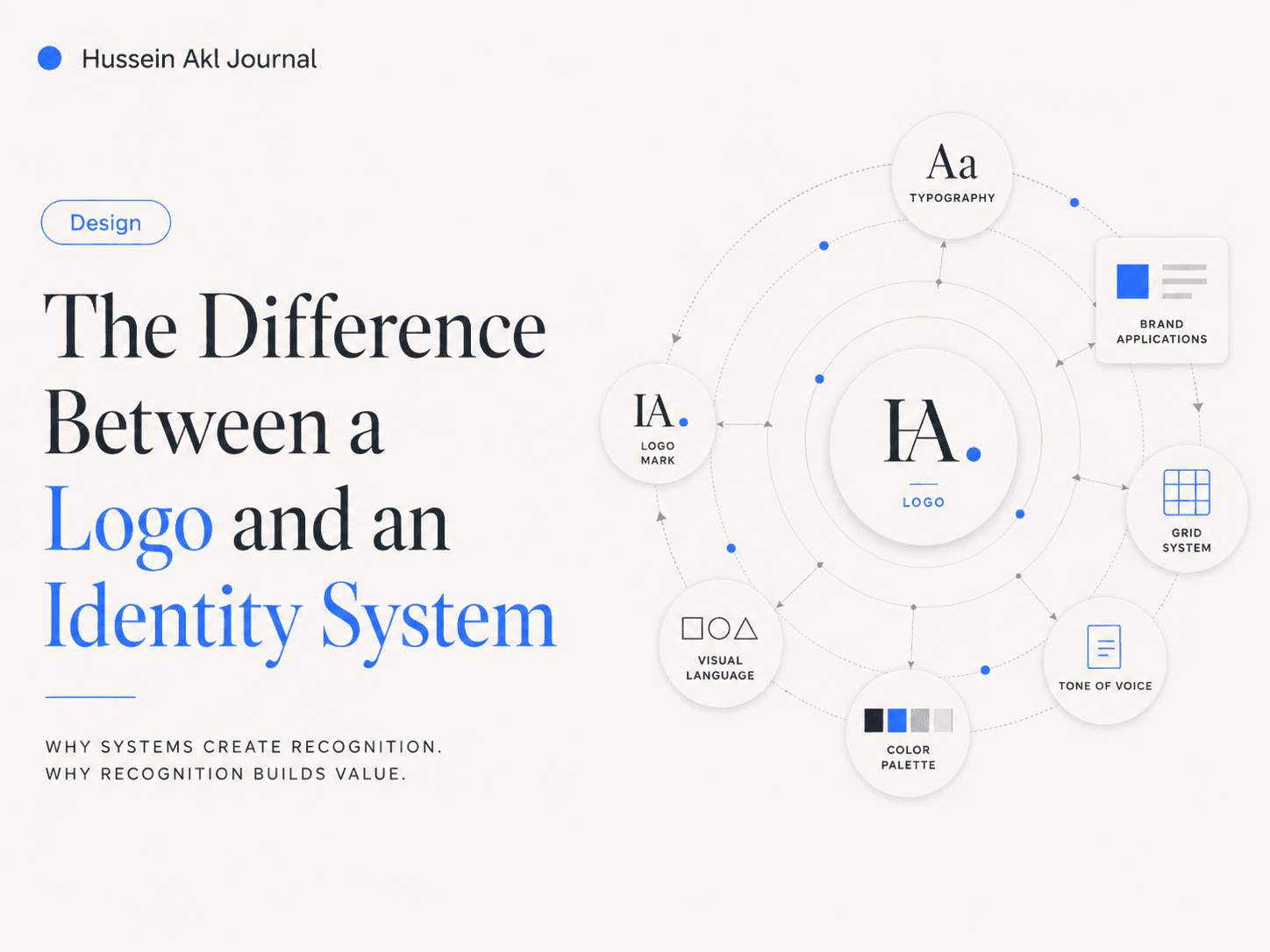
A logo is often the most visible part of a brand project, so it naturally receives disproportionate attention. But recognition rarely comes from a logo acting alone.
What a logo actually does
A logo gives the brand a consistent identifying mark.
It can carry a name, symbol or combination of both. It can help people recognize the source of a product, message or experience.
That is already an important job.
The problem begins when we expect the logo to do every other job too: explain the strategy, create personality, organize information, define photography and make every application feel connected.
No mark can carry that much responsibility by itself.
Identity is the surrounding language
A visual identity is the system around the logo.
It includes the choices that repeat across touchpoints:
- Typography
- Color
- Layout and grid
- Shape language
- Photography or illustration
- Iconography
- Motion
- Tone of voice
- Application principles
The logo is one sentence in that language. The identity is the grammar.
Recognition happens through repetition
Think about the moments when you recognize a brand before you see its logo.
It might be a particular color relationship, a typeface, a photographic style or a distinctive layout.
That is identity doing its job.
Strong systems create multiple recognition cues. The logo can disappear from a composition and the work can still feel attributable.
This is especially important in environments where the mark is small, absent or secondary.
Why logo-only projects feel incomplete
A logo-only project can still be appropriate when the scope is genuinely narrow.
But when a business needs websites, social content, decks, packaging, campaigns or interfaces, the missing decisions quickly appear.
How large should headings be? What is the visual rhythm? Which image styles belong? How should calls to action look? How does the identity behave in motion?
Without a system, every new deliverable becomes a new design problem.
That increases inconsistency and slows production.
The identity does not need to be huge
A system does not have to become a hundred-page manual.
For many smaller brands, a compact set of deliberate decisions is enough:
- Primary and secondary logo usage
- Core color relationships
- Typography hierarchy
- Layout principles
- Image direction
- A small set of repeatable components
- Examples of common applications
The value comes from clarity, not page count.
The strategic difference
The logo answers: Who is this?
The identity system answers: How should this brand consistently show up?
That second question is wider because it includes behavior across different contexts.
A luxury brand, a software tool and a children's product can all have excellent logos, but the systems around those logos need completely different rules.
What I want from an identity
When I build an identity, I want it to do more than impress at launch.
I want it to create a useful vocabulary. I want the client or team to be able to produce a new piece of communication months later and still make a decision that feels connected to the original strategy.
That is the real difference.
A logo gives the brand a mark. An identity gives the brand a way to keep speaking.