Building Momentum Without Burning Out
Sustainable progress depends on rhythm, recovery and choosing a pace that can survive beyond the launch.
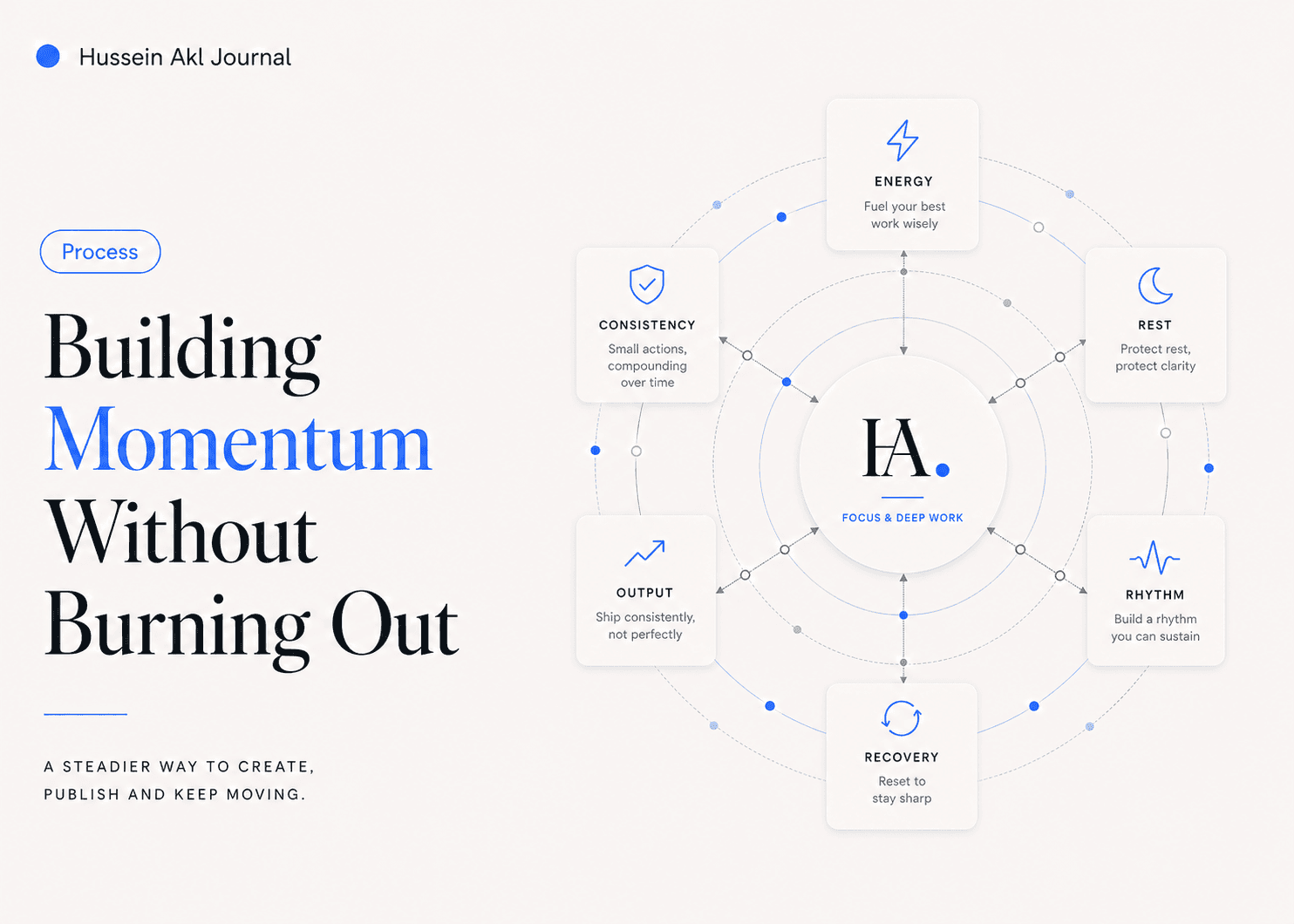
Momentum feels powerful because one completed thing makes the next thing easier. But the same momentum can become destructive if every productive period turns into a permanent sprint.
Momentum is more than speed
I think of momentum as reduced resistance.
The project is clear. The tools are ready. The next action is obvious. Recent progress makes it easier to continue.
That feeling is valuable.
But speed is only one possible result.
Sometimes momentum looks like steady progress without dramatic bursts.
Sprints have a place
There are periods where I intentionally work harder.
A launch. A deadline. A client delivery. A final build. A publishing batch.
Short sprints can create useful concentration.
The problem is treating sprint pace as normal pace.
A system that only works under pressure is not a sustainable system.
I pay attention to energy, not only hours
Two hours of focused work can produce more than six hours of fragmented work.
That is why I try to notice when my best thinking happens and protect some of that time for work that actually requires it.
Administrative tasks can survive lower-energy periods.
Strategic and creative decisions often cannot.
Scheduling by energy is not always possible, but noticing the difference still improves planning.
Recovery is part of the workflow
Rest is easy to treat as the absence of work.
I prefer to treat it as one of the conditions that makes good work repeatable.
Recovery creates perspective.
It makes weak decisions easier to see. It reduces the temptation to solve exhaustion by adding more effort. It makes the next period of focus more useful.
Consistency beats dramatic resets
When a routine breaks, I try not to respond with an extreme restart.
I do not need a perfect Monday, a complete reorganization or a new productivity system.
I need the next useful action.
Small recovery creates faster momentum than a dramatic reset.
I reduce active fronts
Burnout is not always caused by the total amount of work.
Sometimes it is caused by too many different types of work competing at once.
Switching between client work, product development, content, admin and strategy creates invisible cognitive cost.
Reducing the number of active fronts can make the same workload feel more manageable.
Shipping creates energy too
Unfinished work consumes attention.
Shipping something can release that pressure.
This is one reason I prefer smaller milestones.
A completed batch, version or phase creates psychological space.
Progress becomes visible, and the next decision has a clearer starting point.
The pace I want
I am not trying to avoid intense work completely.
I am trying to build a rhythm where intensity is intentional instead of permanent.
That means:
- Clear periods of focus
- Fewer active fronts
- Small shippable milestones
- Recovery after sprints
- A normal pace that still produces progress
The objective is not to feel balanced every day.
It is to create a working life where progress can continue without constantly requiring recovery from the progress itself.