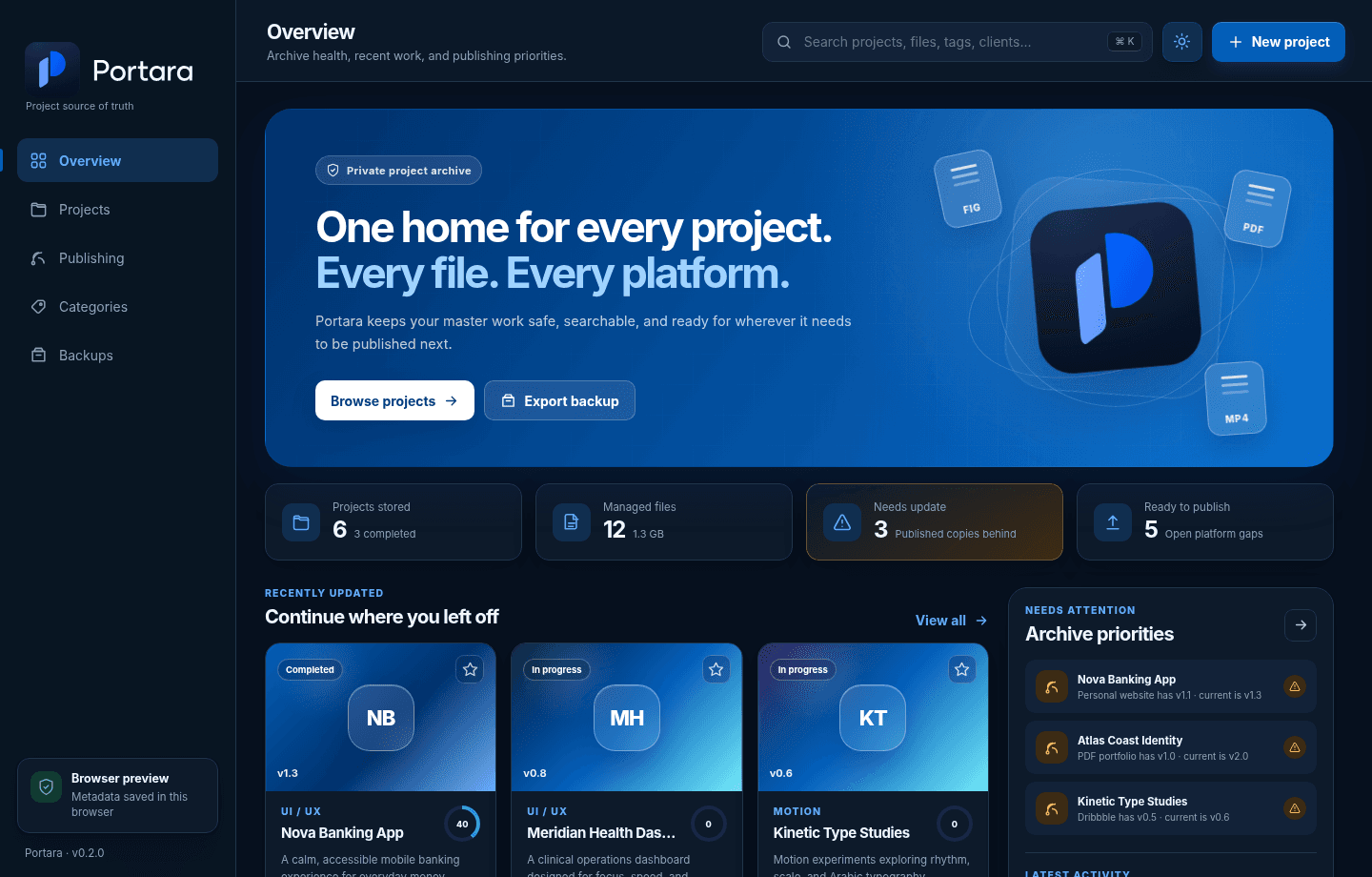
Portara did not begin with a feature list. It began with a recurring problem: creative projects were complete, but the knowledge around them was scattered. This draft documents the decisions that turn that archive problem into a product direction.
Start with the problem before the product
A portfolio is usually treated as a public presentation. The work required to maintain it, however, starts much earlier: collecting images, recording decisions, keeping links current and remembering the story behind each project.
Portara is being framed around that earlier layer—the private system that makes a strong public portfolio possible.
A useful boundary creates a clearer product
The product should not become a generic cloud drive, project-management suite or social network. Its value comes from structuring creative work deliberately.
- One record per project
- Clear role, discipline and status fields
- Media prepared for presentation
- Relationships to products, ventures and written case studies
The identity is an interface promise
The portal-like mark and restrained blue system suggest a calm entry point rather than a loud creative marketplace. That promise now needs to continue into navigation, empty states and the project-entry workflow.
Key takeaways
- The private archive is the product opportunity.
- A narrow boundary is more valuable than a long feature list.
- Identity and interface should communicate the same promise.